jessbcuzz
  • Home Plate
  • Fork That! Blog
  • USPS
  • {(HC=CS2)=CS1}=BMF
  • Courses
    • IB Prep Ethics>
      • IB Prep Ethics Spring
      • IB Prep Ethics Stuff
    • AP Government >
      • AP Gov Stuff Spring >
        • APGOV Stuff
    • IB History of Americas 20th Century Topics>
      • Timely Textbook Reading
      • IB HISTORY STUFF
  • CAS
    • Mission Statements 2012-2013
    • Mission Statements 2011-2012
    • Mission Statements 2010 - 2011
    • Mission Statement 2009-2010
  • CHINA
  • Contact

Quote of the Day
“WHY extremists always focus on women is a mystery to me. But they all seem to. It doesn’t matter what country they’re in. They want to control women. They want to control how we dress, they want to control how we act, they want to control everything about us.” (Hillary Clinton)


Picture


Wag the U.S.A.

Picture


The Brave World

Time to stop singing and start Swing

Picture


NEWS SOURCES


The Atlantic
Austin Statesmen
China Daily
Christian Science Monitor
Dallas Morning News
The Economist
El
Paso Times
EPISD
Foreign Affairs
Iran Daily
The
Monkey Cage
The
Nation

National Public Radio
New York Times
The Onion
Star Tribune
St. Petersbergs Times
Washington Post 
Wolfram|
Alpha


STUDENT'S ENGAGED -- Youth Incharge

Students at Coronado High School are taking owenrship in their community.  They are hosting a community experience event, a U.S. Congressional Debate for candidates in Texas 16th District. 
GET INVOLVED --  PLUG IT IN IT WILL TURN YOU ON 

http://wefillintheblank.weebly.com/
www.facebook.com/wefillintheblank 

Picture
  
FROM THE 

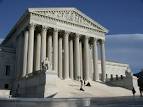
                   SUPREME COURT 
                                                  
                            
CASES YOU SHOULD KNOW


GEORGE W. BUSH v. ALBERT GORE, JR.


On November 7, 2000, citizens of the United States voted in the quadrennial presidential election.  Results of the election hinged on the twenty-five electoral  votes from the state of Florida. On the day following the election, the Florida Division of Elections reported that Republican Governor George W.  Bush had received 2,909,135 votes to Democrat Vice President  Albert Gore, Jr.'s 2,907,351, a margin of 1, 784. Because of the margin of victory, under Florida law an automatic machine recount was conducted. In this recount, the vote difference between the two candidates was reduced to 930 votes,  and Vice President Gore exercised his statutory right by filing a protest and calling for manual recounts 
in four Florida counties.

Following various legal challenges and political actions, the matter was eventually sent to the Florida Supreme Court. The Supreme Court was asked to answer primarily whether discrepancy between an original machine return and a sample manual recount resulting from the way a allot has been marked or punched is an error in vote tabulation which justifies a full manual recount. At issue were "undervotes" (those for which no presidential choice was recorded by the voting machine) and  "overvotes" (those ballots rejected because there were votes for more than one candidate for the same office). was also questioned what should be the standard for counting or not counting votes based on the "chads.'' In using a stylus on paper ballots, some voters apparently failed to perforate the ballot  leaving a piece of the card hanging from the ballot. These  "chads'' --dimpled, hanging and pregnant-it  was charged, caused the "undervotes, " which Gore insisted should be counted.

 The Florida Supreme Court answered yes to the issue of the discrepancy and imposed a deadline of  November 26, at 5:00p.m. for the return of ballot counts. On November 26, the Florida Secretary of State certified the results of the election and declared Governor Bush the winner of Florida's 25  electoral votes.

The United States Supreme Court granted certiorari in this case,  Bush v. Palm Beach  County  Canvassing Board,  and heard oral arguments on December 1. On December 4, 2000, in a per curiam decision, the Court set aside the Florida Supreme Court's decision and ordered the Florida court to do a better job of explaining its rationale for the extension.

Meanwhile, on November 27, Vice President Gore had filed a new lawsuit contesting the certification. The Florida circuit court decided against Gore, stating that he had failed to meet his burden of proof. Gore then appealed,  and this second case went to the Florida Supreme Court.

In this case, the Florida Supreme Court, by a four-to -three vote, reversed the circuit court and ordered a statewide recount of the undervotes to begin the next day. Governor Bush then appealed to the United States Supreme Court. On December 9, the Supreme Court issued a
stay to stop the Florida recount and at the same time scheduled oral arguments on the case for December 11

ISSUES: Did the Florida Supreme Court establish new standards for resolving presidential  election contests, in  violation of Article II,§ 1, cl. 2, of the  United States Constitution? Is the use of standardless manual recounts in a presidential election a violation ofthe Equal Protection
and Due Process Clauses of the Fourteenth Amendment?

Decision

Although seven of the nine justices found constitutional problems with the recount law and procedures as implemented by the Florida Supreme Court, only five of the nine (Rehnquist, O'Connor, Kennedy, Scalia and Thomas) joined a  per curiam (unsigned) decision by which he Florida Supreme Court decision was overturned. The focus of the decision was limited to the ballot counting process itself, specifically the lack of uniform standards for counting the votes. The opinion objected not only to the varying standards used by different counties for determining voter intent, but to aspects of the Florida Supreme Court's order determining which ballots should be counted. The majority ruled that there could be no further counting of Florida's disputed presidential votes. Six separate opinions were written by the justices in this case.

The majority agreed that the cause of the dispute lay with the Florida voting process:
                     The question before the Court is not whether local entities ... may  develop different
                     systems for implementing elections.  Instead, were presented with a situation
                     where a state court with the power to assure uniformity has ordered a statewide
                     recount with minimal procedural safeguards.  When a court orders a statewide remedy, 
                     there must  be at least some assurance that the rudimentary requirements of
                     equal treatment and fundamental fairness are satisfied. This case has shown
                     that punch card balloting machines can produce an unfortunate number of ballots
                     which are not punched in a clean complete way by the voter .. ..

The per curiam opinion suggested a preventive measure that could save the country from a future presidential stand-off like this one by declaring, "After the current counting, it is likely legislative bodies nationwide will examine ways to improve the mechanisms and machinery for voting ."

The Florida Supreme Court had determined that the Florida legislature intended to take advantage of the "safe harbor" provision in the federal statute that makes electors immune to congressional challenge if they are selected by December 12.  Accordingly, the five justices who joined the per curiam opinion held that there was no time to send the case back for a better recount because it was already December 12:
                    ... That date is upon us, and there is no recount procedure in place under the
                    State Supreme Court's order that comports with minimal constitutional
                    standards
                   
                    .... Because it is evident that any recount seeking to meet  the
                    December 12 date will be unconstitutional ... , we reverse the judgment
                    of the Supreme Court of Florida ordering a recount to proceed.
                  
                   Seven Justices of the Court agree that there are constitutional problems
                   with the recount ordered by the Florida Supreme Court that demand a
                   remedy.... The only disagreement is as to the remedy .. 

Recognizing the necessity of staying out of presidential politics if at all possible, the  per curiam opinion defended the Court's acceptance of the case:

                  None are more conscious of the vital limits on judicial authority than are
                  the members of this Court, and none stand more in admiration of the
                  Constitution's design to leave the selection of the President to the
                  people, through their legislatures, and to the political sphere. When 
                 contending parties invoke the process of the courts, however, it 
                 becomes our unsought responsibility to resolve the  federal and
                 constitutional issues the judicial system has beenforced to confront.

The opinion contained an unusual declaration that the principle it established was limited to this one case:
                 Our consideration is limited to the present circumstances, for the 
                 problem of equal protection in election processes generally presents
                 many complexities.

Although unsigned, it is speculated that either O'Cormor or Kennedy, or both, wrote the per curiam opinion because those two justices were the only ones who did not sign another opinion.

The Chief Justice, joined by Associate Justices Scalia and  Thomas, raised further objections to the recount and  said the Florida Supreme Court had violated state law in ordering it. Rehnquist, in a concurring opinion, began by stating:

                 We join the ner curiam opinion. We write separately because we believe
                 there are additional grounds that require us to reverse the Florida Supreme
                 Court's decision. We deal here not with an ordinary election, but with an 
                 election for the President of the United States ....

Rehnquist justified his reasoning in the Court acceptance of this case by writing:

                In most  cases, comity and respect for  federalism compel us to defer to the
               decisions of state courts on issues of  state law. ...  Of course, in ordinary cases,
               the distribution of powers among the branches of a State's government raises no
               questions of  federal constitutional law, subject to the requirement that the 
               government be republican in character. But there are a few  exceptional cases in
               which the Constitution imposes a duty or confers a power on a  particular branch
               of a State's government. This is one of them ...

He continued:

                This inquiry does not imply a disrespect for  state courts, but rather a respect for the
                constitutionally prescribed role of state legislatures. To attach definitive weight to the
                pronouncement of a state court, when the very question at issue  is whether the court has
                actually departed from the statutory meaning, would be to abdicate our responsibility
                to enforce the explicit requirements of Article IL

The Chief Justice quoted from the voting instructions posted to explain exactly what constituted a legal vote:

               AFTER VOTING, CHECK YOUR BALLOT CARD TO BE SURE YOUR VOTING
               SELECTIONS ARE CLEARLY AND CLEANLY PUNCHED, AND  THERE ARE
               NO CHIPS LEFT HANGING ON THE BACK OF THE CARD.

He emphasized that the voting equipment perfonned precisely in the manner in which it was designed to perform and did not count invalid ballots. Rehnquist's  concurring opinion stated the Florida Supreme Court "significantly departed from the statutory framework" in place on election day when it authorized "open-ended" vote recounts that could not be completed by December 12.

 In a footnote, the Chief Justice brought  up a separate Fifth Amendment issue, which justified Supreme Court intervention in state cases:

                ... [O]ur jurisprudence requires us to analyze the  "background principles" of
                state property law to determine whether there has been a taking of property in violation
                of the Takings Clause. That constitutional  guarantee would, of course, afford no
                protection against state power if our inquity could be  concluded by a state supreme
                court holding that state property law accorded the plaintiff no rights ....

Rehnquist concluded that the recount authorized by the Florida Supreme Court of"tens of thousands of so-called  'undervotcs' spread through  64 of the 67 counties" in Florida could not be completed by December 12, the "safe harbor" provision mandated by federal law.

No other justice joined Justice Scalia's concurring  opinion, in which he wrote the recount had to be stopped 
because it threatened "irreparable hann" to Mr. Bush, "by  casting a cloud on what he claims to be the legitimacy of his election."

Justices Breyer and Souter agreed with the majority that the varying standards in different Florida counties for counting the punch-card ballots presented problems  of both Due Process and Equal Protection, making a majority of seven justices in agreement on this issue. But unlike the majority, these justices said the answer  should not be to shut the recount down, but to extend it until the December 18 date for the meeting of the electoral college.  The Court, however, was more fractured on the issue of whether there was any way to fashion a remedy that would allow more counting under a unifonn standard before the electoral college was scheduled to meet on December 18 to cast their votes.

The dissenters argued vainly that the only deadline that mattered was the December 18 date for casting electoral votes. The majority had 
"acted un\visely" to "stop the counting oflegal votes," Justice Stevens said. He was joined in his dissent by Justices Ginsburg and
Breyer, both of whom offered an individual view as well. Stevens clearly felt the Court should not have heard the case:

                        ...  When questions arise about the meaning of state laws, including election laws, it is
                       our settled practice to accept the opinions of the highest courts of the States as
                       providing the final answers. On rare occasions, however, either federal statutes or the
                       Federal Constitution may require federal judicial intervention in state elections. This
                       is not such an occasion.  The federal questions that ultimately emerged  in this case
                       are not substantial ....

Stevens addressed the question of Equal Protection:
 
                       Admittedly, the use of differing substandards for determining voter intent in different
                       counties employing similar voting systems may raise serious concerns. Those concerns
                       are alleviated--if not eliminated--by the fact that a single impartial magistrate will
                       ultimately adjudicate all objections arising from the recount process ....

Stevens concluded:

                         What must underlie petitioners' entire federal assault on the Florida election
                         procedures is an unstated lack of confidence in the impartiality and capacity
                         of the statejudges who would make the critical decisions if the vote count
                         were to proceed ... It is the confidence in the men and women who administer 
                         the judicial system that is the true backbone of the rule of law. Time will one
                         day /zeal the wound to that confidence that will be inflicted by today's
                         decision. One thing, however, is certain. Altlzough we may never know with
                         complete certainty the identity of the winner of this year's Presidential election,
                         the identity of the loser is perfectly clear. It is the nation's confidence in the
                         judge as an impartial guardian of the rule of law. (Emphasis added.)

Justice Souter said that a recount with so little time would be a "tall order" but that "there is no
justification for denying the State the opportunity to try to count all the disputed ballots now." Arguing
that the U. S. Supreme Court should not have heard either case, he wrote:

                          ... [T]he interpretations by the Florida court raise no substantial question under
                         Article II. That court engaged in permissible construction in determining
                         that Gore had instituted a contest authorized by the state statute, and it
                         proceeded to direct the trial judge to deal with that contest in the exercise 
                         of the discretionary powers generously conferred by {Florida statute} ....

Justice Ginsburg also wrote a dissenting opinion, which appeared to be a direct response to Chief
Justice Rehnquist. She was joined by the other dissenters with the focus on the implications for
federalism ofthc majority's action. "I might join the Chief Justice were it my commission to interpret
Florida law," she said, adding, "There is no cause here to believe that the members of Florida's high
court have done less than 'their mortal best to discharge their oath of office,' and no cause to upset their
reasoned interpretation of Florida law."

Explaining why the Court should not have heard this case, Ginsburg stated:

                      The extraordinary setting of this case has obscured the ordinary principle
                      that dictates
its proper resolution: Federal courts defer to state high courts' 
                      interpretations of their
state's own law. This principle reflects the core of
                      federalism, on which we all agree.
"The
Framers split the atom of sovereignty. 
                      It was the genius of their idea that our
citizens would have two political capacities,
                      one
state and one federal, each protected from incursion by the other. " ...

Justice Ginsburg concluded:

                      ...
In sum, the Court's conclusion that a constitutionally adequate recount 
                      is impractical is a prophecy the Court's own judgment will not allow to be tested.
                     Such an untested prophecy should not decide the Presidency of the United States.

Unlike the other dissenters, who said they "respectfully" dissented, Justice Ginsburg closed with only
the words, "I dissent."

Justice Breyer began his dissent by indicating that the time problem Florida faced was partly because the U.S. Supreme Court had slowed down the process by stopping the vote recount:

                      
The Court was wrong to take this case. It was wrong to grant a stay. It should now 
                       vacate that stay and permit the Florida Supreme Court to decide whether the recount
                       should resume.

                       The political implications of this case for the country are momentous. But the federal
                        legal questions presented, with one exception, are insubstantial.

Justice Breyer recounted the history of the deadlocked presidential election of 1876 and the partisan role
that one Supreme Court justice played in awarding the presidency to Rutherford B. Hayes:

                      This history may help to explain why I think it not only legally wrong, but also most 
                      unfortunate, for the Court simply to have terminated the Florida recount ....

Breyer added:

                     ..
.[A ]bove all, in this highly politicized matter, the appearance of a split decision 
                     runs the risk of undermining the public's confidence in the court itself That confidence
                     is a public treasure. It has been built slowly over many years, some of which were marked
                     by a Civil War and the tragedy of segregation. It is a vitally necessary ingredient of any
                     successful effort to protect basic liberty and, indeed, the rule of law itself ... [W}e do risk
                     a self-inflicted wound--a wound that may harm not just the Court, but the Nation .

                     .. .
What it does today, the Court should have left undone. I would repair the damage
                    done as best we now can, by permitting the Florida recozint to continue under uniform
                    standards.

FOLLOW-UP NOTE: Nothing was ordinary about this case. Not its acceptance over the weekend, not
the enormously accelerated schedule, and not the way the decision was released. Although the Supreme
Court had made audiotapes of its oral arguments available for some fifty years, this was the first time
these tapes were available immediately following the arguments. Rather than following the Court's
usual procedure of reading a portion ofthe opinion from the bench, it was approximately 9:30p.m. EST
when the Court released the written decision. This was only about two hours before the December 12
deadline set by federal statute for contesting electors. The next evening, Vice President Gore addressed
the nation and conceded the election to Governor George W. Bush. Certified the winner in Florida by
537 votes, Bush therefore became the President-Elect. This ended a five-week struggle between
election boards, courts and legislatures to determine who would become the forty-third President of the
United States.

In February, 2001, an unofficial count was completed by a Miami newspaper. It showed that Gore
would have gained under fifty votes in Dade County, which was not enough to change the outcome of
the election in Florida. Justice Kennedy told a congressional panel on March 29, 2001, "It was our
responsibility to take the case." Justice Thomas added that in almost a decade on the Court, "I have yet
to have the first political conversation, and I heard none" during the Bush v. Gore case. He continued,
I am only interested in discharging my responsibility as opposed to avoiding it and playing it safe."


Provide by Texas Law Related Education 


Create a free website with Weebly